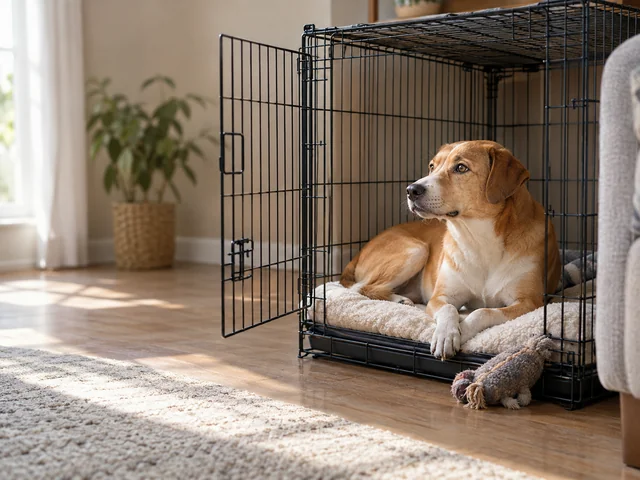
Crate training works best when the crate becomes a calm, predictable place your dog enters without pressure. Start with the door open, pair the crate with meals and treats, and only close the door for a few seconds while your dog is relaxed. Move in small steps, and never use the crate as punishment. Crate training is not a replacement for exercise, bathroom breaks, or treatment for separation anxiety.
Crate Setup Check
Choose a crate that lets your dog stand up, turn around, and lie down without the head pressing against the top. Housing and husbandry guidance for dogs in shelters notes that primary enclosures need enough space for normal postural adjustments such as turning freely and stretching.
Place the crate in a room where the family spends time, but not in a busy walkway. Use simple, washable bedding. If your dog chews or soils bedding, remove it until that issue is managed.
Remove the collar, tags, and any loose harness before crating. Veterinary guidance on kennel safety recommends removing collars and harnesses before kenneling because they can become choking hazards.
The crate should feel like a safe retreat, not a punishment box. Keep the experience positive. Do not use the crate for time-outs or scolding.
First Introduction Without Pressure
Leave the crate door open. Toss a treat near the door, then just inside, and let your dog approach voluntarily. Do not push or place your dog inside.
Keep early sessions short and upbeat. A minute or two is often enough. If your dog backs away, that is normal. Stop and try again later.
Rescue dogs or dogs with fear of confinement may need several days of open-door work before moving forward. Slower progress is not failure.
Build Positive Association With Meals
Feed meals near the crate first, then inside with the door open. Once your dog is comfortable eating inside, close the door briefly while they are eating or working on a long-lasting chew. Open it before they finish and before they become anxious.
Do not lure the dog in with a treat and then quickly shut the door if that creates suspicion. The goal is for the dog to relax inside, not to trap them.
For puppies, plan a bathroom break shortly before and after crate meals. For adult dogs, supervise long-lasting chews and keep sessions calm.
Add Door-Closed Duration
Start with the door closed for just a few seconds while you stay nearby. If your dog stays calm, open the door quietly and release them. If whining starts or builds, return and make the next repetition shorter.
Keep arrivals and departures low-key. Practice stepping out of the room for a few seconds, then returning. Increase time in tiny increments only while your dog remains relaxed. Consistency matters more than rushing.
Potty Schedule and Accident Protocol
Puppies need frequent bathroom trips: before and after every crate session, after meals, after naps, and overnight when needed. The younger the puppy, the less time they can hold urine.
If an accident happens inside the crate, do not punish. Punishment can make a dog afraid and more likely to hide or refuse the crate. Clean the area with an enzymatic cleaner, which breaks down odor that ordinary cleaners may leave behind.
House-training guidance for newly adopted dogs includes scheduled feeding, frequent outdoor trips, and the use of enzymatic cleaners, while discouraging punishment for indoor elimination.
Adult dogs that were previously reliable but begin having accidents should see a veterinarian. Medical issues or changes in routine can affect bladder control.
Nighttime Whining Plan
Short, intermittent whining may be normal protest. A sharp, persistent, or escalating whine may mean the dog needs to go out or is truly distressed.
If you suspect a potty need, take the dog out on leash for a boring, quiet bathroom break. No play, no treats, no long sniffing. Then return the dog to the crate calmly. Do not release a dog from the crate as a reward for escalating whining.
Puppies need planned nighttime potty breaks. If your dog suddenly panics, screams, chews the crate, or tries to escape, stop and get help. That can look more like separation anxiety or severe confinement distress.
Short Absences and Alone Time
Practice brief departures: step out for a few seconds and return before the dog becomes anxious. Keep goodbyes and hellos low-key. Gradually build time, but return if you notice distress.
A review of separation anxiety treatment describes gradually increasing absences, starting with very short departures and returning before problem behavior begins.
Watch for panic signs such as drooling, frantic escape, destruction, or soiling despite a recent potty break. These may require a veterinarian or behavior professional.
Crate training is not the same as leaving a dog crated all day while you are at work. It teaches a skill; it does not erase boredom, exercise needs, or anxiety.
Troubleshooting Common Problems
- Whining: Shorten duration, increase exercise and potty breaks, and reward calm behavior.
- Refusing to enter: Go back to open-door treat work and feed meals farther from the crate if needed.
- Escape attempts: Recheck crate fit and latches, and consider whether the dog is panicking rather than being stubborn.
- Drooling: Take it seriously as a stress sign and reassess the training pace.
- Chewing bedding: Remove bedding and provide a safe chew item only when supervised.
Before deciding the dog is stubborn, adjust reinforcement timing, crate size, exercise, and potty schedule. If panic persists, a veterinarian or behavior professional should be involved.
Safety Red Flags and When to Adjust
Stop crate training and reassess if you see heavy panting, signs of overheating, injury, repeated panic-based escape attempts, or any sudden behavior change. Collars and harnesses left on the crate can create serious entanglement risks.
Adjust the crate size, schedule, bedding, and training pace as needed. If the dog is not ready for more freedom, keep the crate positive and use short, calm sessions. When red flags continue, contact a veterinarian or a qualified behavior professional.