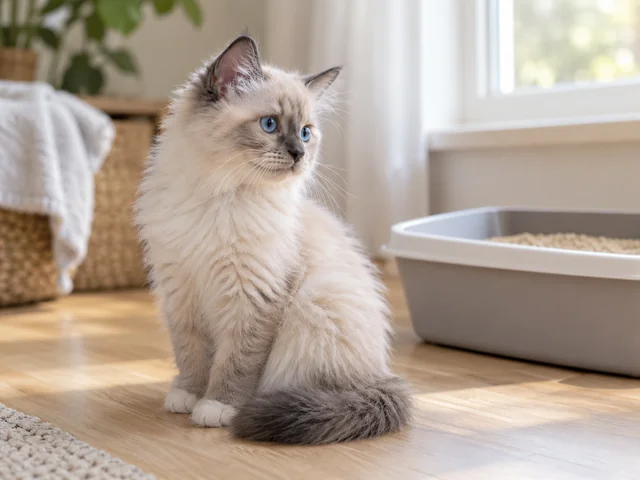
One soft but formed poop in a bright, eating, drinking Ragdoll kitten is usually not an emergency. But repeated soft or watery stools in a young kitten should be checked by a veterinarian, because kittens can dehydrate quickly. Common causes are diet changes, parasites, and overfeeding, not simply being a Ragdoll.
Grade the stool before you panic
Not every imperfect poop means diarrhea. In cats, diarrhea is usually defined as soft, semi-formed, or liquid feces passed more often than normal, as described in a clinical review of diarrhea in cats.
Think of your kitten’s stool on a simple scale:
- Firm and shaped: normal.
- Soft but still holds its shape: note it, but do not panic.
- Mushy or semi-formed: mild diarrhea.
- Watery or puddle-like: clear diarrhea, especially if repeated.
Also look beyond the shape. A slimy coating on the poop, fresh red blood, black or tarry stool, or straining and rushing to defecate are important details. A veterinary guide to feline diarrhea includes stool appearance, mucus, fresh blood, and urgency as useful history. A single soft stool without those signs is different from repeated watery stools with blood or mucus.
Check the kitten, not just the poop
Before deciding how concerned to be, look at the whole kitten:
- Is she drinking?
- Is she playful or very tired?
- Is she eating?
- Has she vomited?
- Does she seem uncomfortable around the belly?
- Has she felt lighter or lost weight?
- Is she using the litter box normally?
A bright kitten that is eating and drinking, with one soft poop, is lower concern than a quiet kitten that refuses food or has repeated watery stools. Young kittens may not handle fluid loss as well as adult cats. If urine clumps are smaller or less frequent, mention that to your vet.
Why kitten age changes the bar
A soft poop in an adult cat is often less concerning than the same poop in a young kitten. Kittens, especially those under about 16 weeks, are still going through weaning, food transitions, stress, and rapid growth. They also face more exposure to parasites.
Overfeeding can be a common non-infectious cause of diarrhea in very young kittens, as described in guidance on fading kitten syndrome. Several factors can overlap, so age lowers the threshold for veterinary help.
Breed is not a shortcut. A large UK study of Ragdoll cats found diarrhea was recorded more often in Ragdolls than in cats overall, but the authors did not confirm a specific breed-related digestive cause. That means a Ragdoll kitten with soft poop still needs the same careful look at diet, parasites, and hydration as any other kitten.
Likely causes in a Ragdoll kitten
Start with the most practical causes:
- Recent food change
- Too much food or very rich kitten food
- Dairy, such as cow’s milk
- Too many treats or scavenging
- Stress from a new home, visitors, or handling changes
- Intestinal parasites, including Giardia and coccidia
Giardia and coccidia are gut parasites that can cause soft or watery stool. A reference on infectious causes of diarrhea in kittens covers why these causes need testing rather than guessing. A single soft poop after a food change is less worrying than repeated soft poop with no obvious trigger.
Safe food moves for the next 24 hours
Do not fast a kitten. Kittens need steady energy and fluids.
Try these conservative steps:
- Keep meals small and frequent.
- Continue the current kitten food if it is complete and balanced.
- Do not suddenly switch foods.
- Remove dairy and high-fat treats.
- Avoid adding pumpkin, extra fiber, or supplements without veterinary guidance.
If your vet has prescribed a probiotic or a bland temporary diet, follow their specific directions. A probiotic is not a fix for every loose stool. The next 24 hours should be boring and predictable. Slow, simple care is safer than experimenting with several changes.
What not to try at home
Kittens are not small adult cats. Human anti-diarrheal medicines, including over-the-counter products, can be toxic to cats. A feline toxicology guide warns that many over-the-counter human medicines are unsafe.
Random supplements and essential oils can also cause harm. Some essential oils are considered toxic to pets, especially cats, according to a review of essential oils in dogs and cats.
Repeatedly switching foods based on internet threads can add more variables and delay a real diagnosis. If you already tried pumpkin, probiotics, or a diet swap and the stool is still soft, that is useful information for your vet. It is not a reason to try more home remedies without testing.
When to call the vet
Call your veterinarian today if your Ragdoll kitten has:
- Soft or loose stool lasting more than 24 to 48 hours
- Watery diarrhea more than once or twice
- Fresh red blood or black, tarry stool
- Vomiting
- Refusal to eat
- Unusual tiredness
- Sunken eyes, tacky gums, or less urine
Seek emergency care if your kitten seems very weak, has repeated vomiting and diarrhea together, or shows obvious dehydration. When in doubt, call your vet. Bring a fresh stool sample and a simple timeline: when it started, what she ate, and any treats or changes.
What the vet will likely check
Most vets will start with a hands-on exam and a fecal test, which checks a stool sample for parasite eggs, cysts, and other clues. The vet may also weigh the kitten, assess hydration, and feel the belly.
A clinical approach to feline diarrhea describes asking about diet, deworming, vaccination, stool appearance, and recent changes. In many young kittens, parasites and diet-related upset are the most common early considerations. The exam and fecal test help rule out more serious causes based on age, symptoms, and physical findings.
After it resolves: prevent the next episode
Once the stool is normal again, keep the routine stable:
- Reintroduce any changes slowly.
- Keep treat variety low and treat amounts small.
- If you must change foods, transition over 7 to 10 days unless your vet says otherwise.
- Keep parasite prevention as recommended by your vet.
- Track stool consistency, appetite, energy, vomiting, and new foods or treats.
If soft poop comes back, do not jump to another random food. Share the poop log with your vet and ask whether a repeat fecal test or a planned diet trial is more useful than another food switch.