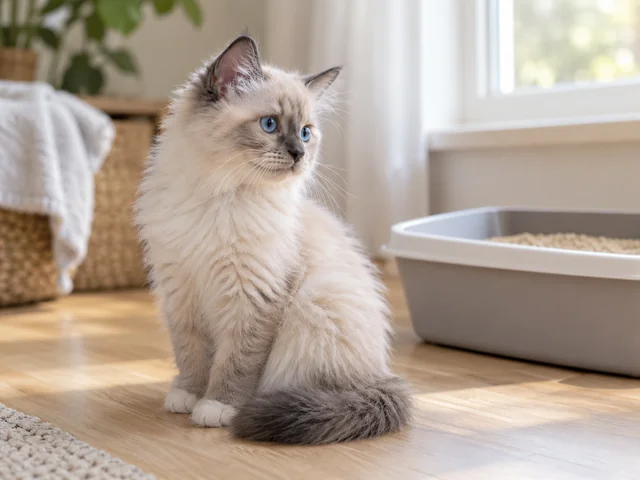
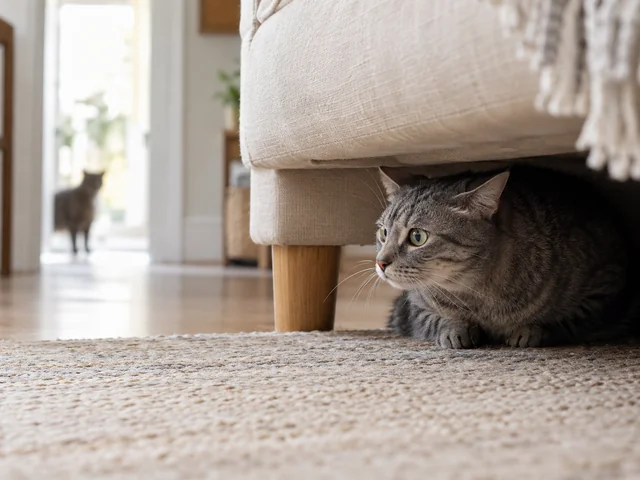
If one cat is always the chaser and the other cat is always hiding, freezing, or being cornered, that is not mutual play. Treat it as intercat aggression—aggression between cats in the same home. Separate them safely first, check for hidden injuries, and do not force them back together.
Play or a real fight?
Play wrestling can look rough. In mutual play, cats usually pause, take turns, keep claws in, and stay quiet. A real fight is more likely when there is hissing, yowling, fur flying, cornering, or one cat hiding or freezing.
If one cat is always the chaser and the other is always the target, treat it as aggression, not play. In an observational study of close-contact cat interactions, wrestling without vocalizing was more likely to be playful. Vocalizing, chasing, and long inactive pauses pointed toward tension or conflict. Some interactions start as play and then shift into something more stressful for one cat.
Injury and stress check
Separate the cats before checking either one. Cat bites are easy to miss because they can look like tiny puncture holes. An overview of cat bite abscesses explains that these wounds can become infected and form a pus-filled swelling under the skin.
Stress after repeated fights can show up as hiding, not eating, avoiding the litter box, overgrooming, or tail tucking. A review of stress in owned cats notes that stress can reduce food intake and contribute to urine marking and overgrooming.
Do a hands-off visual check. Look for blood, facial swelling, limping, or low energy. Call your vet for any bite wound, limp, lethargy, or sudden change in either cat. Checking for hidden damage is not overreacting—it is responsible cat parenting.
Break it up without making it worse
During a fight, do not reach in with your hands. Instead:
- Clap once or make a short loud noise.
- Toss a soft blanket between the cats, not on top of them.
- Hold a large piece of cardboard or a towel as a visual barrier.
- Use the barrier to break eye contact while you guide each cat into a separate room.
The 2024 AAFP intercat tension guidelines recommend placing an object between cats to block eye contact and warn against trying to pick them up during a tense moment.
Do not yell, spray water, or punish after the fact. These can increase fear and feel unpredictable to the cat. An already aroused cat may also redirect aggression onto you. A review of stress in owned cats states that punishment by owners should be completely avoided.
Avoid citrus and essential oil sprays as deterrents. Some essential oils are considered toxic to cats, especially when used on cats. A review of essential oil use in dogs and cats notes this concern, and a case report of citrus-oil toxicity in a cat describes severe illness after d-limonene exposure.
Why one cat keeps targeting the other
Common triggers include:
- Redirected aggression from seeing or hearing another cat outside.
- Guarding food, water, litter boxes, or resting spots.
- Fear-based territorial stress or feeling trapped.
- Pain, illness, or overstimulation.
Redirected aggression happens when a cat gets worked up by something it cannot reach, such as an outdoor cat or a loud noise, and then turns on the nearest cat or person. A study of redirected aggression in cats found loud noises and other cats were common triggers.
Cats are not trying to dominate the other cat or get revenge. They are responding to threat, competition, pain, or fear.
If the aggression started suddenly, especially in an older cat, have that cat checked by a veterinarian before diving deeper into behavior work. Pain, hyperthyroidism, and sensory decline can change how an older cat reacts. Clinical guidance on aggression in multi-cat households says medical problems should be ruled out first, and cats older than 6–7 years with sudden aggression should have a thyroid profile included.
Rebuild the territory
Cats feel safer when they do not have to share narrow spaces or guard resources. Make changes that lower the need to compete:
- Give each cat separate food and water stations.
- Provide one more litter box than the number of cats, spread out in different locations.
- Add cat trees, shelves, window perches, and hiding spots.
- Use furniture or room dividers as sight blockers.
- Remove or open up tight hallways, doorways, and other chokepoints.
Feline environmental needs guidelines recommend separate food, water, litter, resting, and scratching areas. Veterinary behavior guidance on intercat aggression advises at least one more litter box than cats, placed in multiple locations rather than clustered.
You can also use a feline pheromone diffuser or spray labeled for cats. The 2024 AAFP intercat tension guidelines note that synthetic feline pheromones may improve a cat’s emotional state, though the effect can be subtle.
This is not spoiling them. It reduces forced close contact and gives each cat a way to avoid a fight.
Reintroduce in slow stages
Go at the pace of the more nervous cat. Management guidance on intercat aggression describes a staged plan using scent swapping, room exchanges, feeding across a closed door, and visual contact through a barrier.
A common order is:
- Swap towels or bedding so each cat gets used to the other’s scent.
- Switch rooms for short periods, with each cat having its own food, water, and litter box.
- Feed them on opposite sides of a closed door.
- Allow brief visual sessions through a baby gate, cracked door, or other barrier.
Only move to the next step if both cats stay relaxed. If hissing, growling, charging, or freezing returns, go back a step and slow down. That may take days to weeks, and sometimes longer after serious fights. Forced togetherness usually makes aggression worse, not better.
Daily peace plan
Keep the environment calm with short daily routines:
- Play with each cat separately with a wand toy.
- Feed on a predictable schedule.
- Reward calm behavior when cats notice each other from a distance.
- Offer puzzle feeders, cat trees, and window perches.
- Keep food, water, and resting spots far enough apart that neither cat guards a shared area.
Feline environmental needs guidelines recommend playing with individual cats at separate times and offering puzzle feeders. Consistency matters more than one long, stressful training session. Short daily wins help both cats learn that life is not a contest.
Red flags and professional help
Get professional help if you see:
- Blood drawn or deep puncture wounds.
- Repeated abscesses.
- One cat hiding most of the time, not eating, or eliminating outside the litter box.
- Sudden aggression in an older cat.
- Any human bite.
Call your veterinarian first. They can check for pain or illness and, when needed, refer you to a veterinary behaviorist or a certified cat behavior consultant. Medication may be part of treatment, but it should be used alongside behavior and environmental changes. The 2024 AAFP intercat tension guidelines say medication should only be used alongside environmental and behavior modification.
If you cannot safely separate the cats, keep them fully apart and ask your veterinarian for a safety plan. In severe cases, temporary boarding or another housing arrangement may be the safest option. Management guidance on intercat aggression warns against allowing ongoing aggressive encounters and says some cats may need to be separated at all times.
Asking for help is not failure. It protects both cats and the people in the home.