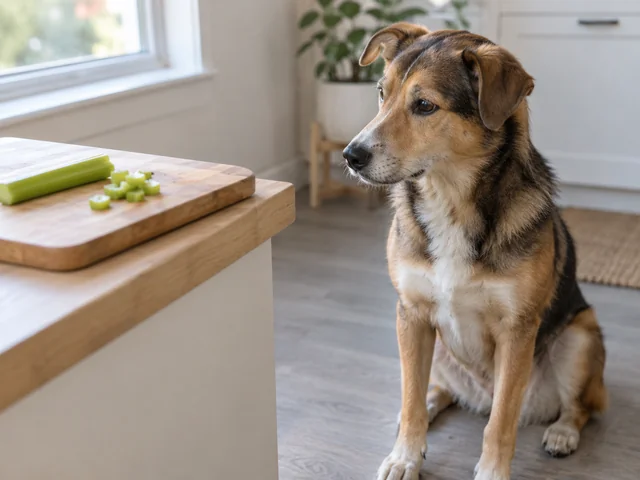
Yes. Plain, washed celery that has been trimmed and cut into small pieces is generally okay as an occasional treat for most healthy dogs. The key is preparation: remove tough strings, skip dips and seasonings, and keep portions small.
The 60-Second Prep Check
Plain celery only. Rinse the ribs under water to remove dirt and surface residue. Trim away the base and any damaged spots.
Cut celery into small, dog-safe cubes. The tough strings that run along each rib can be hard to chew and may increase choking risk, especially for puppies, small breeds, seniors, and dogs that gulp food. Pull or peel those strings off before cutting.
Celery leaves are not a known toxicity risk for dogs, but they can be stringy and harder to manage. If you offer leaves, chop them finely. Skip ranch, salt, onion powder, garlic powder, celery salt, and other seasonings. Those additions are not part of a safe celery treat.
Portion Guide by Dog Size
Celery is mostly water and fiber, so more is not better. A large amount can cause gas, bloating, or loose stool, especially in a dog that is not used to it.
A practical daily range is:
- Toy or small dogs: 1–2 small diced pieces
- Medium dogs: 2–4 small diced pieces
- Large dogs: 3–5 small diced pieces
Keep all treats, including celery, under 10% of your dog’s daily calories, as recommended in veterinary guidance on treat feeding. One accidental extra piece is unlikely to be toxic for a healthy dog, but consistency matters more than quantity.
Signs It Didn’t Sit Well
Some dogs may react to a new food. Stop offering celery if you notice mild digestive signs such as:
- Gas
- Stomach gurgling
- Diarrhea
- Vomiting
More concerning signs can point to choking or a blockage:
- Gagging or retching
- Pawing at the mouth
- Repeated swallowing
- A painful or tight belly
If any of these signs appear, stop giving celery and call your vet, especially if signs continue or get worse.
Dogs Who Need a Vet’s OK First
Celery is not necessary for any dog, so it is fine to skip it. Some dogs need extra caution:
- Puppies
- Senior dogs
- Toy breeds
- Dogs with dental issues or missing teeth
- Dogs with a history of choking or intestinal blockage
- Dogs with sensitive stomachs
- Dogs with kidney or heart disease on a low-sodium or prescription diet
Celery is low in sodium but not zero. For a dog on a strict prescribed diet, any new treat—including celery—should be vet-approved. Treats and table foods can add sodium and other nutrients that affect disease management, which is why veterinary guidance on cardiovascular nutrition emphasizes reviewing all treat sources with owners.
Safe Serving Ideas That Won’t Add Toxins
Keep it simple and plain:
- Plain raw celery pieces, cut small
- Small frozen celery pieces for a cool, crunchy treat
- Pureed celery mixed into regular food
Do not stuff celery with xylitol-sweetened peanut butter, ranch, cheese spreads, onion, garlic, or human leftovers. Xylitol, onion, and garlic can be toxic to dogs, as described in a review of household food risks for pets.
Introduce new treats one at a time. That way, if your dog has a reaction, you will know which food likely caused it.
If They Ate Celery with Dip or Seasoning
Stay calm and act step by step:
- Remove access to any remaining food.
- Note what was on the celery, how much your dog ate, and when.
- Watch for vomiting, diarrhea, or unusual tiredness.
- Call your vet or a pet poison helpline if the celery had onion, garlic, xylitol, or another toxic ingredient, or if severe signs appear.
Do not make your dog vomit unless a veterinarian or poison helpline specifically tells you to. Poisoning management should be based on the toxin, dose, timing, and the individual dog, as explained in veterinary guidance on managing poisoning cases.
When to Call the Vet Instead of Waiting
Call a veterinarian right away if your dog shows any of these signs:
- Choking or difficulty breathing
- Persistent vomiting
- Persistent or severe diarrhea
- Refusing food
- A painful or bloated belly
- Collapse or severe weakness
When you call, have your dog’s weight, the amount of celery eaten, and any toppings, dips, or seasonings ready. That helps the veterinary team assess the situation faster.
Plain celery in small, prepared pieces is low-risk for most healthy dogs. If your dog has never had celery, start with one or two small pieces and watch for the next day.