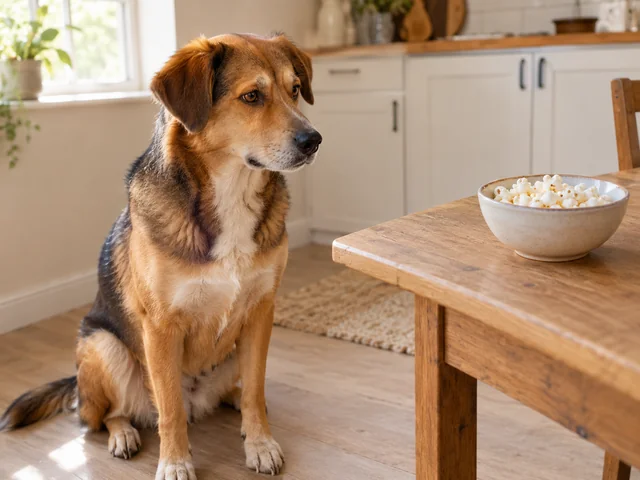
Yes, dogs can eat plain air-popped popcorn in very small amounts as an occasional treat. Keep it fully popped, cooled, and completely free of butter, oil, salt, or seasonings. The main risks come from toppings and hard kernels, not from the plain popcorn itself.
Safe serving: air-pop, cool, no toppings
The only suitable version is plain air-popped popcorn. That means no butter, no oil, no salt, and no seasoning blends. Let it cool before offering. Offer only fully popped pieces and remove any hard, unpopped kernels.
Corn itself is not the main worry here. The problem is what people usually add. Fatty or greasy toppings can cause vomiting, diarrhea, dehydration, and sometimes pancreatitis, which is inflammation of the pancreas. A veterinary holiday safety warning notes that fatty and greasy foods can trigger these problems.
Small dogs and dogs with a history of pancreatitis are especially sensitive to rich, fatty toppings. If your dog gets popcorn, keep it plain and offer just a piece or two.
How much is too much?
Popcorn should be a tiny treat, not a snack bowl. Treats should stay under 10% of daily calories, according to veterinary nutrition guidance on dog treats.
For a toy dog, that might be just a few fully popped pieces. A large dog could occasionally have a small handful. Even plain popcorn adds calories without meaningful nutrition.
Puppies, senior dogs, overweight dogs, diabetic dogs, and dogs prone to pancreatitis should skip popcorn or get veterinary approval first. One or two plain pieces rarely cause harm in a healthy dog, but too much can lead to gas, diarrhea, or weight gain.
Toppings and flavors that make popcorn dangerous
Plain is not just a preference. Toppings are where the real danger usually lives.
- Butter or oil: High fat content can cause stomach upset and pancreatitis.
- Salt: Large amounts can cause stomach upset, excessive thirst, and sodium-related problems.
- Cheese powder, caramel, and movie-theater flavorings: These may contain fat, salt, sugar, or hidden toxic ingredients.
- Chocolate: Toxic to dogs.
- Garlic and onion powder: Toxic to dogs, and cooking or processing does not make them safe.
- Xylitol: A sugar substitute that can cause dangerously low blood sugar and liver failure in dogs.
A veterinary review of household foods toxic to dogs describes serious effects from chocolate, onion and garlic, and xylitol.
Labels like “light,” “organic,” or “kettle” do not mean dog-safe. Check the ingredient list. If flavored popcorn contains xylitol, garlic, onion, or chocolate, treat it as a poison risk.
Kernels, hulls, and choking/blockage risk
Unpopped kernels, sometimes called old maids, are hard. They can crack teeth or cause a digestive blockage if swallowed. Popcorn hulls can also lodge along the gums or in the throat, especially in small dogs.
A case report of a puppy with popcorn in the airway shows why hard pieces should not be taken lightly.
Supervise your dog, remove unpopped kernels, and never give popcorn on the cob or pieces with sharp edges. If your dog gulps food, skip popcorn or crush fully popped pieces into very small bits.
If your dog already ate buttered, salted, or microwave popcorn
Stay calm and gather a few details:
- How much was eaten?
- What toppings or flavorings were on it?
- How big is your dog, and what health conditions does your dog have?
- When was it eaten?
If a healthy dog ate one or two pieces of buttered or lightly salted popcorn, monitor for 12–24 hours. Offer water and watch for vomiting, diarrhea, or other changes.
Call your veterinarian or pet poison control right away if:
- The dog ate a large amount.
- The popcorn contained xylitol, garlic, onion, chocolate, or unknown flavoring.
- Your dog has pancreatitis, diabetes, kidney disease, or another ongoing condition.
Do not try to make your dog vomit unless a veterinarian or poison control specifically instructs you to.
Red flags: when to call the vet
Call the vet if you notice any of these signs:
- Repeated vomiting or diarrhea
- Belly pain or bloating
- Lethargy or weakness
- Tremors or collapse
- Drinking or urinating much more than usual
- Trouble breathing, gagging, or choking
Signs may not appear immediately. Onion or garlic toxicity can take a day or more to appear, according to veterinary guidance on food toxicities. Fat-related pancreatitis or an obstruction can also show up later.
If you are unsure, calling the vet with details is the safest next step. It is not a waste of time.
Crunchy alternatives dogs can have instead
If your dog loves the crunch, there are lower-risk options. Baby carrots, cucumber slices, plain green beans, apple slices without seeds, and small pieces of plain cooked sweet potato can satisfy that need without the popcorn risks.
Introduce any new treat slowly and keep portions tiny. Even these alternatives should stay within the same under-10% treat rule. If your dog has a medical condition or prescription diet, ask your veterinarian before adding anything new.