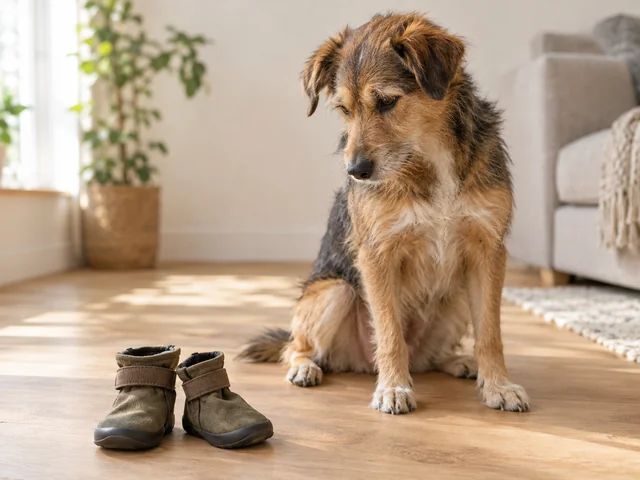
Most healthy dogs do not need shoes for everyday walks. Boots are worth considering when the ground is dangerously hot, icy, salted, sharp, or when a paw needs protection during healing. Let the surface and your individual dog guide the decision, not fashion.
1. Check the Surface First
Before buying boots, try a 5-second hand test. Place the back of your hand on the pavement, ice, or trail surface. If it feels too hot or too cold to hold there comfortably, it is too harsh for your dog’s paw pads.
Hot pavement can be much hotter than the air. In a survey of walking surface temperatures, ground surfaces reached over 150°F while air temperatures ranged from about 78°F to 96°F.
Ice-melt salt and de-icer create a different problem. These products can irritate paw pads and collect between toes. Dogs often lick their paws afterward, and ice melts can be a pet health hazard, especially if swallowed. Wipe paws after winter walks and check the toe spaces.
The hand test is a quick safety filter, not a verdict on all dogs.
2. Know Normal Paw Limits
Healthy dog paws are built for contact with the ground. The pads are thick, hairless, and cushioned. They give dogs natural grip and sensory feedback about how much pressure to place.
Dogs do have sweat glands on their paw pads, but their main role appears to be traction, not whole-body cooling. In research on paw sweating, blocking paw sweating reduced friction between the paw and a running surface. A review of heat stress in dogs notes that paw pad sweat glands provide only a small contribution to heat loss.
Normal paw limits also change with age and conditioning. Puppies may have soft, uncalloused pads that can develop friction blisters even on cool pavement. A case report on “pavement paws” described this in a puppy after a long walk. A small breed, a senior dog, or a dog recovering from a paw injury may not have the same tolerance as a healthy adult dog accustomed to rough ground.
Shoes are a tool, not a default requirement.
3. When Shoes Help
Boots can prevent real pain and injury in the right situations. Consider them for:
- Hot pavement, sand, or rock.
- Snow, ice, and salted sidewalks.
- Rocky, thorny, or rough trails.
- Protecting a bandaged or healing paw.
- Working dogs, sled dogs, and service dogs on demanding surfaces.
- Dogs with paw allergies, pad disease, or other paw problems.
Dog boots are commonly used as protection against snow, ice, hot sand, road salt, and paw injury, according to a study of dogs wearing protective boots. A report on custom orthotic boots shows how boots can help protect serious pad and lower-leg wounds while they heal.
The boot must fit the dog. Paw shape, dewclaws, and gait vary. A sled-dog boot is not automatically right for a Chihuahua.
4. When Shoes Hurt
Most boot problems come from poor fit, rushed training, or using them in the wrong situation.
- Boots can change the way a dog places its foot. A gait study in dogs found changes in ground reaction forces and signs of reduced paw stability while walking.
- Loose boots can twist or slip. Tight boots can restrict blood flow and cause rubbing.
- A dog’s paw normally provides sensory feedback and grip. Thick or stiff soles can dull that feel.
- Anxious or reactive dogs may freeze, high-step, chew at the boots, or try to pull them off. Swallowed pieces of boot material can cause a digestive blockage.
- Dogs rely mainly on panting to cool down. Paw pads play only a small part in heat loss, so boots are not the main reason a dog overheats. Still, remove boots if your dog is panting heavily or seems uncomfortable in warm conditions.
Most “dogs hate shoes” reactions are not permanent. They usually relate to fit, patience, or training.
5. Fit Before You Buy
Get the fit right before relying on boots:
- Measure the paw while your dog is standing with weight on the paw.
- Follow the brand’s measuring instructions. Front and back paws may be different sizes.
- Choose a flexible sole with traction.
- The boot should be snug but not tight. Toes need room to spread naturally.
- Leave the boots on for 5–10 minutes, then check for red marks, rubbing, or twisting.
A loose boot can spin and cause blisters. A tight boot can restrict circulation. Proper fit is especially important for dogs that may not show pain clearly or have reduced paw sensation, as guidance on assistive devices for dogs notes.
Before buying, look for a return-friendly policy and materials designed for dogs. Function matters more than cute designs.
6. Train the Boots
Boots are a new sensation. Introduce them the way you would any new handling tool.
- Let your dog sniff the boots.
- Reward calm contact with treats.
- Put one boot on for a few seconds, then remove it.
- Build to all four boots indoors with treats and praise.
- Practice short walks on safe, familiar surfaces before using boots on heat, ice, or rough terrain.
In the boot gait study, dogs were given at least a week to become accustomed to the boots before testing. That adjustment period matters. If your dog freezes, high-steps, or chews, slow down and go back a step.
7. Safer Alternatives
You do not always need boots. These options reduce paw exposure without buying gear:
- Walk early or late to avoid hot pavement.
- Choose grass, dirt, or shaded routes.
- Use paw wax or balm for mild cold or salt exposure.
- Carry small dogs across an unsafe stretch.
- Use boots only when conditions truly require them.
Paw wax is a middle path, not a substitute for boots in extreme heat, on sharp rocks, or over long distances. If the surface is dangerous, avoid it or use appropriate footwear.
8. Red Flags
Remove the boots and stop the activity if your dog shows any of these signs:
- Limping or holding up a paw
- Excessive licking or chewing at the paws
- Bleeding, blisters, burns, frostbite, or swelling
- Redness, raw spots, or heat around the boot area
- Sudden refusal to walk
Burns and frostbite can worsen quickly and may need professional care according to environmental injury guidance.
If your dog swallowed boot material or licked ice melt and then vomits, becomes weak, or acts lethargic, call a veterinarian right away. Swallowed boot pieces can cause a blockage, and some ice melt products are toxic.
If the surface was extreme or the paw looks injured, do not continue the walk.