There is no official, science-backed top-10 list. Most lists are really ranking trainability — how readily a breed learns and follows commands — not all forms of dog intelligence. The breeds that commonly appear are Border Collies, Poodles, German Shepherds, Golden Retrievers, Doberman Pinschers, Shetland Sheepdogs, Labrador Retrievers, Rottweilers, Papillons, and Australian Cattle Dogs. The order changes from list to list, and a dog can be a brilliant worker yet ignore a cue at home.
What “Smart” Actually Means
Dog intelligence has more than one layer. People usually blend three types:
- Instinctive intelligence is breed-specific working ability: herding, retrieving, guarding, or scent work.
- Obedience intelligence is trainability or command-following. This is what many rankings measure.
- Adaptive intelligence is problem-solving ability, like working out a puzzle or opening a latch.
A study of 13 dog breeds found breed differences in social understanding, self-control, and spatial problem solving, but not in short-term memory or logical reasoning. The same study found big differences even within breed groups. Two herding breeds were not identical just because they shared a job type. That explains why “smart” can mean eager to please in one dog and independent in another.
The Ranking Criteria Behind the List
Rankings usually mix obedience trial results, breed club surveys, trainer opinions, and how quickly a breed learns a task. None of those is a single valid IQ test.
A review of perceived dog trainability points out that people have ranked breeds for trainability even though behavioral evidence for underlying breed differences is inconsistent. A questionnaire-based study in 11 breeds found breed differences in owner-rated trainability, and even field-bred and show-bred lines of the same breed can differ. So the order is directional, not absolute. Mixed breeds are often left out entirely.
The Top 10, Breed by Breed
This is a common lineup, not a validated scientific order.
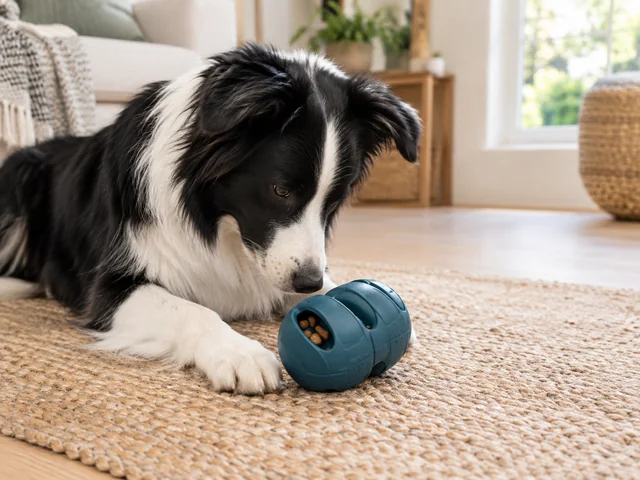
- Border Collie — Herding intelligence. Learns tasks quickly and needs a job. Can herd children or pets and may become anxious without mental work.
- Poodle — Highly trainable and good at puzzle-style problem solving. Needs regular coat care and can be sensitive.
- German Shepherd — Working and guarding intelligence. Focused and trainable, but needs early socialization and may be reserved with strangers.
- Golden Retriever — Retrieving and tuned into people. Usually eager to please, but can be mouthy and high-energy.
- Doberman Pinscher — Alert and quick to learn. Needs clear training and early socialization.
- Shetland Sheepdog — Herding and responsive. Often alert-barks and can be sound-sensitive.
- Labrador Retriever — Retrieving and food-motivated. Generally trainable, but can be mouthy and energetic.
- Papillon — Small companion breed with strong problem-solving skills. Still needs daily mental work and can become vocal when bored.
- Rottweiler — Guarding and steady. Trainable, but powerful and reserved; benefits from early socialization and consistent training.
- Australian Cattle Dog — Herding problem solver. Very high drive and may nip at heels when understimulated.
Individual dogs and mixed breeds vary widely. A mixed-breed dog may combine the best — or the most challenging — parts of these traits.
Smart but Not Easy: The Hidden Costs
High intelligence often arrives with high exercise and mental stimulation needs. A review of ADHD-like behavior in dogs notes that excess activity in working breeds often reflects unmet exercise or mental stimulation needs rather than a disorder.
Bored smart dogs can become destructive, vocal, or anxious. But the fix is preparation:
- Herding breeds may nip at heels.
- Guarding breeds may be aloof or watchful with strangers.
- Retrievers may be mouthy and carry or chew objects.
Training itself helps. In one problem-solving study, dogs with more training experience were more successful at opening a food box and spent more time interacting with the task than untrained dogs.
Best Smart Breeds by Lifestyle
Think about what you can actually live with:
- Apartment-friendly smart breeds: Miniature or Toy Poodles and Papillons may adapt to smaller spaces, but barking and daily mental work still matter.
- First-time-owner smart breeds: Golden Retrievers, Labrador Retrievers, and Poodles tend to be eager to please, but they still need exercise and training.
- Active-family smart breeds: Border Collies, Australian Shepherds, and Labradors can thrive in busy, outdoorsy homes.
- Experienced-handler smart breeds: German Shepherds, Rottweilers, Dobermans, and independent hounds or terriers may be smarter than their obedience reputation suggests, but they can be intense or self-directed.
“Smart” does not automatically mean easy. Many hounds and terriers are excellent problem solvers but are not especially eager to please.
Red Flags in “Smartest Breed” Claims
Be skeptical when a list or breeder promises a genius. A breed average is not a puppy guarantee.
- Breeders charging more for “genius” lines are not using a meaningful intelligence test.
- Articles that equate obedience with intelligence miss independent problem-solving breeds.
- Rescue and mixed-breed dogs are often excluded from rankings, but many are highly trainable.
Research on prospective dog owners warns that breed stereotypes can be misleading; many behavioral traits vary more within a breed than between breeds, according to a mixed-methods study of information-seeking before dog acquisition. Early socialization also matters. A review of canine socialization found that puppy classes were associated with better trainability and reduced fear or aggression later. A large personality study found breed and age had strong associations with personality, but effect sizes were small and socialization remained important.
How to Choose Your Smart Breed
Run through this checklist before choosing:
- Energy level: Can you meet the exercise need every day?
- Grooming: Can you maintain the coat?
- Barking: Can your home tolerate noise?
- Trainability: Do you want biddable or are you comfortable with independent thinking?
- Family fit: How will the dog do with children or other pets?
- Mental work time: Can you provide training, puzzles, or scent games?
A structured decision model can help potential owners weigh lifestyle factors before choosing a dog. Meet the individual dog when possible. Ask about the parents’ temperament, and consider foster-based rescues where the dog has been observed in a home.
The smartest dog is not the one at the top of a list. It is the one whose brain and energy fit your daily routine.