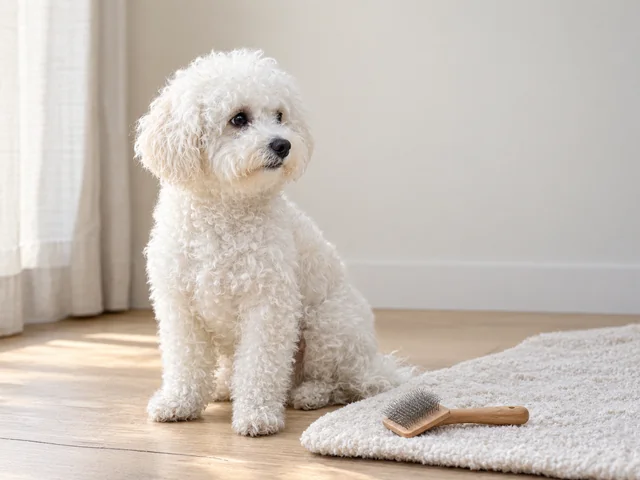
Several small breeds shed far less than average, including Poodles, Bichon Frises, Maltese, Havanese, Shih Tzus, Yorkshire Terriers, Miniature Schnauzers, and Chinese Cresteds. But low shedding is not the same as no shedding or allergy-free. Every dog produces dander, saliva, and urine proteins that can trigger allergies, and low-shedding coats often come with higher grooming needs.
Decode the coat: low-shedding vs. hypoallergenic
A low-shedding dog drops less visible hair, not zero hair. The bigger misconception is the word “hypoallergenic.” Dog allergens are proteins found in dander (dead skin flakes), saliva, and urine. A review of hypoallergenic animals finds no scientific evidence that any dog breed is truly hypoallergenic.
Saliva matters more than many owners expect. Research on dog saliva allergens found more allergy protein diversity in saliva than in dander extract. Licking can still trigger reactions even when hair is sparse. One study comparing homes with hypoallergenic and other dogs found no significant difference in household dog allergen levels.
Grooming removes some loose hair and dander buildup, but it cannot remove saliva or urine allergens. A low-shedding coat is not an allergy-free dog.
Compare the top small low-shedding breeds
Use the same criteria for every breed: size, coat, energy, grooming load, and noise level. The breeds below are often called low-shedding, but they are not identical.
| Breed | Typical adult weight | Coat type | Grooming | Temperament and energy |
|---|---|---|---|---|
| Toy/Miniature Poodle | 4–20 lb | Curly | Frequent brushing and clipping | Playful, trainable, smart |
| Bichon Frise | 12–18 lb | Curly | Frequent brushing and clipping | Friendly, social, cheerful |
| Maltese | 4–7 lb | Silky | Daily brushing | Affectionate, attached |
| Havanese | 7–13 lb | Silky/wavy | Frequent brushing | Social, adaptable |
| Shih Tzu | 9–16 lb | Long double | Daily brushing and clipping | Calm, people-focused |
| Yorkshire Terrier | 4–7 lb | Silky | Daily brushing | Alert, terrier energy |
| Miniature Schnauzer | 11–20 lb | Wiry double | Strip or clip regularly | Active, watchdog |
| Chinese Crested | 5–12 lb | Hairless or powderpuff | Skin care or brushing | Sensitive, affectionate |
Genetics shapes how much a dog sheds. A genetic study of coat traits places Poodles and Bichon Frises among minimal-shedding breeds. Double-coated breeds can still shed seasonally. Crossbreeds are less predictable. As noted in a survey of poodle-mix owners, an estimated one-third of Labradoodle puppies in a single litter may inherit a shedding Labrador-type coat.
Match temperament to your daily routine
Temperament matters more than coat when a dog will be left home or live in an apartment.
- Velcro lap dogs: Maltese, Chinese Cresteds, and many Shih Tzus bond closely. They may follow you room to room and dislike long stretches alone.
- Playful apartment athletes: Toy or Miniature Poodles and Havanese need daily play and training but can adapt to small spaces.
- Terrier-like watchdogs: Yorkshire Terriers and Miniature Schnauzers are alert. They may bark at visitors, hallway sounds, or passing dogs.
Small dog syndrome can develop when training is skipped because the dog is tiny. A study of smaller dog behavior and training found smaller dogs were rated as less obedient and more excitable when owners were inconsistent and did less training and play. Consistent routines improved obedience.
Separation anxiety is a real concern, but it is not guaranteed by breed. A review of separation anxiety risk factors reports that excessively attached dogs and dogs in apartments may be at higher risk.
Grooming load by coat type
Low shedding often means high maintenance, not low upkeep.
- Curly coats: Poodle-type hair traps loose hair instead of dropping it. It keeps growing and mats easily without regular brushing and clipping.
- Silky coats: Maltese and Yorkie hair tangles. Expect daily brushing and regular trims.
- Double coats: Shih Tzus and Miniature Schnauzers have thicker undercoats. Some double-coated low-shedding dogs still shed seasonally.
- Hairless coats: Chinese Cresteds need skin care, including cleaning, moisturizing, and sun protection.
Across breeds, smaller dogs tend to have longer coats and higher grooming demands, according to AKC breed trait data. The hidden workload catches many owners. In the survey of poodle-mix owners, more than twice as many reported that grooming was more intensive than expected compared with owners of other dogs.
Exercise, apartment fit, and barking
Small size does not mean low energy. Toy and small breeds still need daily walks, indoor play, and mental work.
- Puzzle toys, short training games, and treat searches can tire a small dog indoors.
- Toy breeds may need pet stairs or ramps to reach furniture without high-impact jumps.
- Barking varies. Small breeds tend to bark more than larger dogs, according to AKC breed trait data. Terrier types are especially alert.
Renters should ask about noise before choosing, not after. Daily exercise and mental enrichment reduce boredom-related barking more reliably than simply selecting a quiet-looking breed.
Kids, guests, and other pets
Sturdier builds generally handle young children more safely. Miniature Schnauzers and Havanese are relatively solid for small dogs, but no small dog should be treated like a stuffed toy. Maltese, Yorkies, and Chinese Cresteds are fragile and can be hurt by rough handling or falls.
Supervision is non-negotiable. In research on child-dog interactions, even friendly behaviors like petting commonly preceded bites from the family dog. A bi-national study of bites to children found boys and younger children were at higher risk, and in one of the two study areas smaller breeds were more likely than larger dogs to bite a household child.
Herding and terrier breeds may nip or chase when excited. Manage children and guests around food, toys, and resting spots, and teach kids not to corner a small dog. For multi-pet homes, go slow. Puppies showed calmer behavior around household cats when introductions were early and gradual, according to a study of puppy introductions to cats. Use the same gradual approach with resident dogs: neutral area, short sessions, separate feeding spaces.
Health risks and lifetime costs
A low-shedding coat does not prevent health problems. Small breeds share several common issues.
- Dental disease: This is the big one. A large UK report on common dog disorders found periodontal disease was the most frequent specific diagnosis, affecting 12.5 percent of dogs. Risk rises as body size shrinks. A study of Chihuahua health reported the condition in 13.5 percent of that breed.
- Luxating patella: This is the medical term for a kneecap that slips out of place. The Chihuahua study recorded it in 4.0 percent of dogs.
- Tracheal collapse: The windpipe can flatten during breathing, causing a chronic cough. A study of tracheal collapse in small-breed dogs found obesity and very small body size were associated with more severe collapse. Most dogs improved with weight management and medication.
- Eye conditions: Flat-faced small breeds such as the Shih Tzu have higher eye risks. A study of Shih Tzu health found eye problems in 11.9 percent and noted that these dogs are far more likely to develop corneal ulcers.
- Skin allergies: Skin disorders are common across dogs and were the most common grouped problem in Shih Tzus, at 16.6 percent in that study.
These conditions can mean repeat vet visits, dental cleanings, or surgery. A UK welfare prioritisation review gave dental disease the highest welfare impact score among common disorders. Because no coat prevents these costs, a savings fund or pet insurance is a practical budget line.
Red flags and meet-and-greet test
Before buying or adopting, watch for these warning signs:
- No health testing for conditions common in the breed
- Any claim of a “hypoallergenic guarantee”
- Puppies offered before 8 weeks of age
- Dirty, overcrowded, or secretive breeding conditions
- Refusal to show the mother and littermates
Federal shipping rules require puppies to be at least 8 weeks old. Yet UK puppy acquisition research shows a quarter of owners still take puppies home earlier than veterinarians recommend. Early separation has been linked to later fear, excessive barking, and attention-seeking. Puppies from pet stores are especially risky. A review of puppy sourcing and behavior found pet-shop puppies were nearly twice as likely to show owner-directed aggression.
Before committing, spend time with the breed or adult dog. If allergies are a concern, test your response in the actual home when possible, because a quick visit may not match daily exposure. Ask about grooming tolerance, barking patterns, and how the dog behaves when left alone. Your own observation beats an online profile.